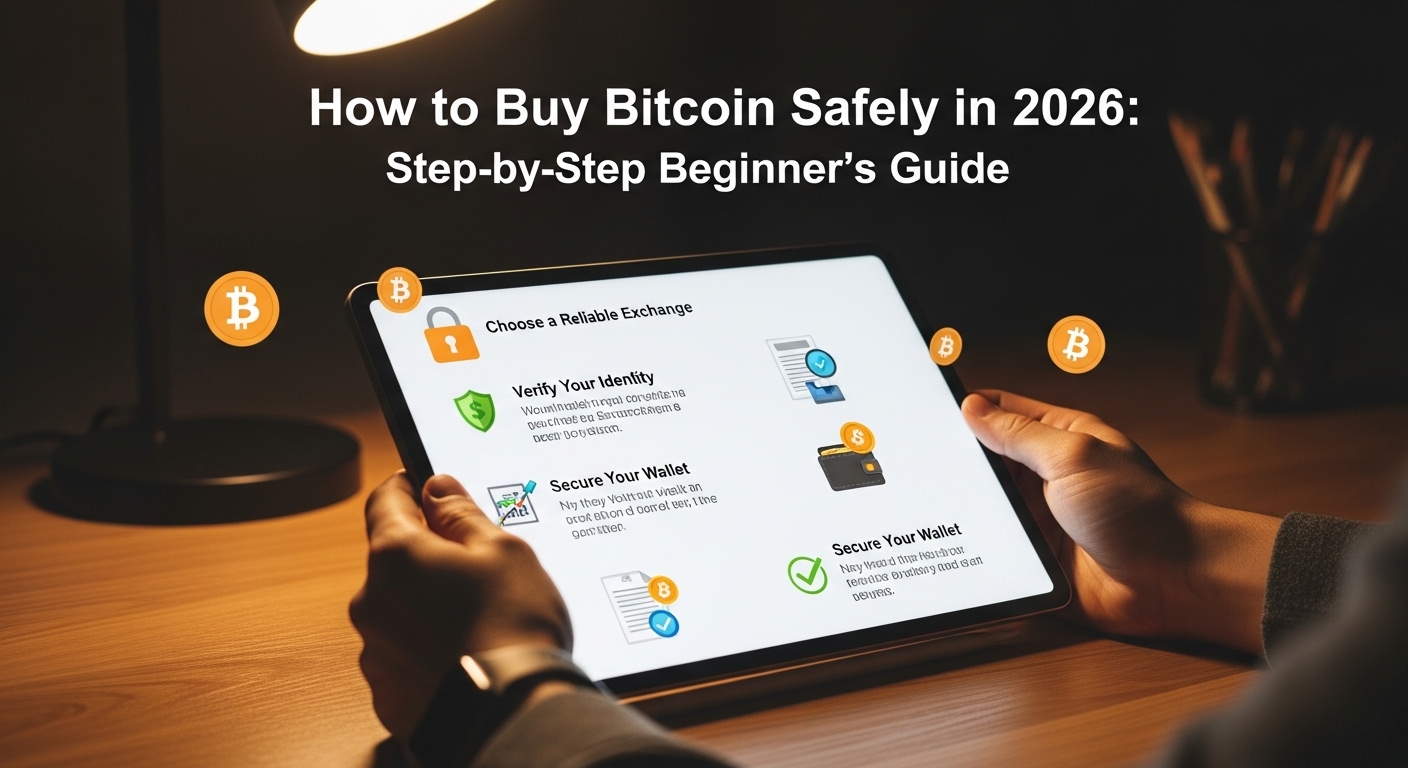
Bitcoin isn’t new anymore. It’s no longer just a tech experiment or something only programmers talk about on forums. In 2026, Bitcoin is part of mainstream finance. Banks offer crypto services. Governments regulate it. Businesses accept it.
But here’s the truth: buying Bitcoin safely still matters more than ever.
If you’re a beginner, you might feel overwhelmed. Wallets. Exchanges. Private keys. Two-factor authentication. It sounds technical, right? Don’t worry. This guide breaks everything down in plain English, step by step.
Let’s make your first Bitcoin purchase safe, smart, and stress-free.
What Is Bitcoin and Why Do People Buy It?
Before pulling out your credit card, it’s important to understand what you’re buying.
Bitcoin is a decentralized digital currency. That means:
- No central bank controls it
- Transactions happen on a blockchain
- Supply is limited to 21 million coins
People buy Bitcoin for different reasons:
- Long-term investment
- Protection against inflation
- Diversification
- Sending money globally
- Belief in decentralized finance
Think of Bitcoin like digital gold. It’s scarce. It’s borderless. And it’s built on math, not politics.
Is Buying Bitcoin Safe in 2026?
Yes — but only if you do it correctly.
In 2026, security has improved a lot. Exchanges are more regulated. Wallet technology is stronger. But scams and hacking attempts still exist.
The biggest risks aren’t Bitcoin itself. They are:
- Phishing scams
- Fake investment platforms
- Weak passwords
- Storing coins on insecure exchanges
The good news? You can avoid almost all risks by following a clear process.
Let’s walk through it.
Step-by-Step Guide to Buying Bitcoin Safely
Step 1: Choose a Trusted Crypto Exchange
A crypto exchange is where you buy Bitcoin.
In 2026, popular exchanges include regulated platforms that follow strict security standards. When choosing one, check:
- Government regulation
- Insurance protection
- Strong security features
- Good user reviews
- Transparent fees
What to Look For in an Exchange
| Feature | Why It Matters |
|---|---|
| Regulation | Protects against fraud |
| Two-Factor Authentication (2FA) | Extra login security |
| Cold storage | Keeps funds offline |
| Clear fees | No surprise charges |
Avoid unknown exchanges promising guaranteed profits. If it sounds too good to be true, it probably is.
Step 2: Create and Verify Your Account
Once you pick an exchange, you’ll need to create an account.
You’ll usually provide:
- Full name
- Email address
- Phone number
- Government ID
This process is called KYC (Know Your Customer). It helps prevent fraud and money laundering.
It may feel annoying, but it protects you.
Pro Tip:
Use a strong, unique password. Combine letters, numbers, and symbols. Never reuse passwords from other sites.
Step 3: Secure Your Account Immediately
Before depositing money, secure your account.
Here’s what you should do right away:
- Enable Two-Factor Authentication (2FA)
- Turn on withdrawal confirmations
- Set up anti-phishing codes
- Use a password manager
Security is like locking your front door. You wouldn’t leave it open overnight, right?
Step 4: Add Funds to Your Account
Now you’re ready to deposit money.
Most exchanges allow:
- Bank transfer
- Debit card
- Credit card
- Payment apps
Comparing Payment Methods
| Method | Speed | Fees | Best For |
|---|---|---|---|
| Bank Transfer | 1–3 days | Low | Larger investments |
| Debit Card | Instant | Medium | Quick purchases |
| Credit Card | Instant | Higher | Small amounts |
Bank transfers usually have lower fees. Cards are faster but more expensive.
Choose what fits your situation.
Step 5: Buy Bitcoin
Now comes the exciting part.
On the exchange:
- Search for Bitcoin (BTC)
- Enter the amount you want to buy
- Review transaction fees
- Confirm purchase
You don’t need to buy a whole Bitcoin. You can buy fractions. Even $10 worth is possible.
Bitcoin is divisible into tiny units called Satoshis.
Step 6: Move Your Bitcoin to a Secure Wallet
Here’s where many beginners make mistakes.
Leaving Bitcoin on an exchange is convenient — but not the safest option long term.
Instead, move your Bitcoin to a private wallet.
Types of Wallets
1. Hot Wallet (Online Wallet)
- Connected to internet
- Easy to use
- Good for small amounts
2. Cold Wallet (Hardware Wallet)
- Offline storage
- Highest security
- Ideal for long-term holding
| Wallet Type | Security Level | Best For |
|---|---|---|
| Exchange Wallet | Medium | Trading |
| Mobile Wallet | Medium-High | Daily use |
| Hardware Wallet | Very High | Long-term storage |
If you’re investing seriously, a hardware wallet is worth it. It costs around $70–$200 but adds strong protection.
Common Mistakes to Avoid
Buying Bitcoin is simple. Losing it is easier.
Avoid these mistakes:
1. Falling for Scams
Never send Bitcoin to strangers promising double returns.
2. Ignoring Security
Weak passwords are a hacker’s dream.
3. Panic Buying
Don’t buy just because the price is rising fast.
4. Investing More Than You Can Afford
Crypto is volatile. Prices move quickly.
5. Forgetting Recovery Phrases
Your wallet recovery phrase is critical. Store it offline. Never share it.
Costs of Buying Bitcoin in 2026
Buying Bitcoin isn’t free. Here are common costs:
- Trading fees (0.1%–2%)
- Deposit fees
- Withdrawal fees
- Network fees
Let’s look at a simple example:
If you buy $1,000 worth of Bitcoin with a 1% fee:
- Fee = $10
- You receive $990 worth of Bitcoin
Always check the fee breakdown before confirming.
How Much Bitcoin Should a Beginner Buy?
There’s no perfect number.
A simple strategy many beginners use:
- Start small
- Use Dollar-Cost Averaging (DCA)
- Invest consistently
For example:
- Invest $100 per month
- Hold long term
- Avoid emotional decisions
This strategy reduces stress and market timing risks.
Tax Considerations in 2026
In many countries, Bitcoin is taxable.
You may owe taxes if you:
- Sell Bitcoin for profit
- Trade it for another crypto
- Use it for purchases
Keep records of:
- Purchase price
- Sale price
- Dates
Using crypto tax software can make this easier.
Benefits of Buying Bitcoin Safely
Why go through all these steps?
Because safety gives you:
- Peace of mind
- Control over your assets
- Reduced risk of theft
- Long-term confidence
Bitcoin isn’t just about making money. It’s about owning your financial future.
Is 2026 a Good Time to Start?
Many experts believe Bitcoin adoption will continue growing.
By 2026:
- More institutions hold Bitcoin
- Regulations are clearer
- Technology is stronger
- Public awareness is higher
But remember: no one can predict short-term prices.
Bitcoin rewards patience.
Conclusion
Buying Bitcoin safely in 2026 isn’t complicated. It just requires the right steps.
Choose a trusted exchange.
Verify your account.
Enable strong security.
Deposit funds carefully.
Transfer Bitcoin to a secure wallet.
Avoid scams. Invest responsibly. Keep your recovery phrase safe.
Bitcoin can be a powerful investment tool. But safety comes first.
When you protect your assets, you protect your future.
FAQs
1. What is the safest way to buy Bitcoin in 2026?
Use a regulated exchange, enable two-factor authentication, and transfer your Bitcoin to a hardware wallet for long-term storage.
2. Can I buy Bitcoin without ID?
Most regulated exchanges require ID verification. Some peer-to-peer platforms allow limited purchases, but they carry higher risk.
3. How long should I hold Bitcoin?
Many investors hold long term (3–10 years) due to Bitcoin’s historical growth pattern.
4. Is it safe to store Bitcoin on an exchange?
It’s safe for short-term trading, but not recommended for large or long-term holdings.
5. What happens if I lose my wallet recovery phrase?
If you lose your recovery phrase and access to your wallet, your Bitcoin may be permanently unrecoverable.